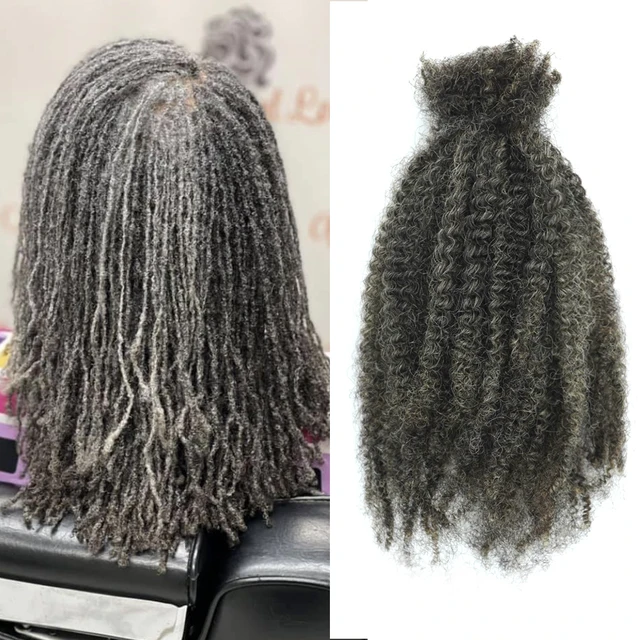
Grey blending has moved from a niche request to a routine appointment in mature clientele salons. For wholesale buyers, the risk is not availability but consistency: two shipments of "salt and pepper" bulk can differ visibly in tonal balance, and the stylist only discovers it mid-installation.
1. Specify Grey Percentage, Not a Colour Name
"Salt and pepper" describes a family, not a specification. A workable purchase order states the grey percentage band, the ratio of silver strands to charcoal strands, and the base natural tone the grey is blended into. Once those three values are locked on an approved sample, the factory can match reorders against the physical reference rather than a verbal description.
2. The Three-Cycle Salon Wash Test
Dimensional grey is only useful if it survives real aftercare. Before committing a seasonal order, shampoo the approved sample through the same clarifying and conditioning routine the salon sells, then compare the silver strands against the unwashed reference under daylight. Any shift toward yellow or any dulling of the charcoal strands indicates the grey was surface-toned rather than processed through the fibre, and that batch will not hold its dimension across an eight to ten week installation.
3. Building the Reorder Specification
Photograph the approved sample under fixed lighting, note the grey percentage band and base tone on the purchase order, and keep a sealed control bundle in the salon store room. When a reorder is delivered, compare against the control bundle before the stock enters the service floor. This is the only reliable way to keep a grey blend menu position stable across seasons.